Save-First Budgeting: Plan What to Keep Before You Spend
Many people try to save whatever is left at the end of the month. Save-first budgeting starts from the opposite direction: decide what you can keep before everyday spending begins.
The method is simple: plan must-cover expenses, planned extras, and a safe-to-set-aside amount before the month becomes noisy.
Start with the money you want to keep.
Save-first budgeting is a practical planning habit, not financial advice or a guarantee of savings.
What is save-first budgeting?
Save-first budgeting means planning before spending. You separate must-cover expenses, estimate planned extras, decide what feels enough for the month, and set money aside early instead of waiting for leftovers.
Start with costs that need to be handled before optional spending.
Make room for likely extras before they surprise you.
See what can be kept before the month starts moving.
Why saving from leftovers often fails
Small purchases add up, unplanned extras appear, and the month can feel unclear. Money without a plan is easier to spend because it does not yet have a job.
Save-first budgeting gives the month a simple shape before daily decisions begin.
The simple save-first monthly flow
If you plan on payday, this flow can be used while the month's money is still untouched.
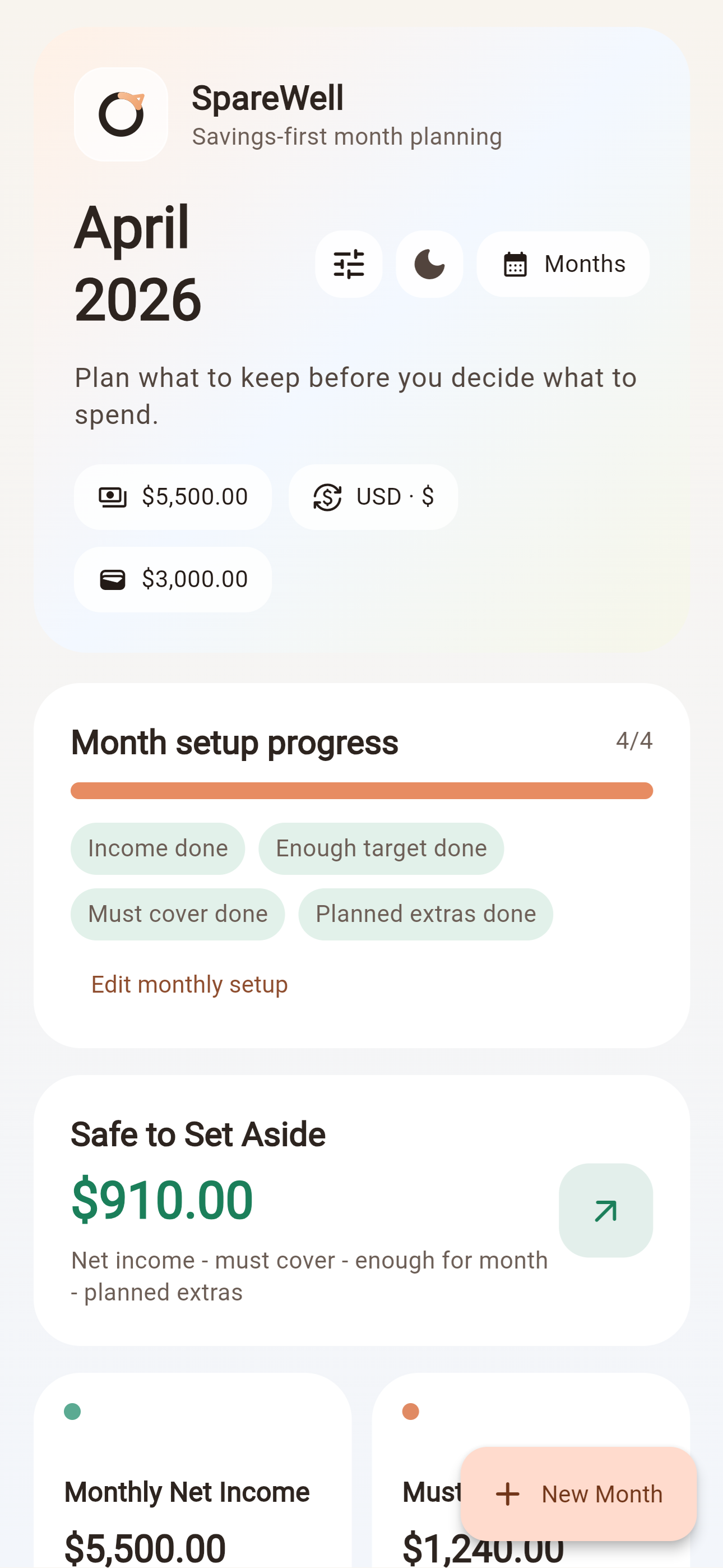
Use SpareWell for save-first monthly planning
SpareWell is a mobile monthly budget planner built around save-first planning. It works offline, does not require bank sync, and helps users plan what to keep before they spend.
Use Money Map if you prefer Notion
Money Map is a save-first Notion budget template with a monthly planning dashboard. It helps users plan must-cover expenses, planned extras, and what is safe to set aside.
Save-first budgeting is not about restriction
The goal is clarity, not guilt. Planned spending is still allowed. The method simply helps you know what is safe before the month gets messy.